
Introduction
As electricity prices across Europe remain an unpredictable burden, apartment tenants and homeowners are turning to plug-and-play balcony solar. The idea is simple: hang a couple of lightweight solar panels on your railing, plug them into a standard outlet, and watch your electricity bills drop.
But for first-time buyers, this simplicity raises immediate safety questions:
- Is it really safe to plug a balcony solar system straight into a wall outlet?
- Could it overload my circuits or cause a fire?
- Is Balcony Solar legal? Will I get fined?
The short answer is yes, it is highly safe and fully legal across most of the European Union—provided you choose certified equipment and follow basic installation rules. This guide breaks down the technical safeguards, local regulations, and essential safety checkpoints you need to know.

How Plug-In Balcony Solar Works Safely
To trust plug-and-play solar technology, it helps to understand the engineering that keeps it from damaging your household grid. Unlike complex traditional rooftop installations, balcony systems operate as localised, safe appliances.
Simple Science Behind Backfeeding
Traditional appliances draw electrical current from the grid into your home. A plug-in solar system does the exact opposite through a process called backfeeding:
- The Conversion: Solar panels capture sunlight as Direct Current (DC). A compact device called a microinverter instantly converts this into Alternating Current (AC) matching your home grid's exact voltage.
- The Flow: When plugged into a standard wall socket, the electricity flows directly into your home network.
- Path of Least Resistance: According to the laws of physics, the solar-generated electricity will be preferentially consumed by your home's active appliances (like your refrigerator or WiFi router), effectively reducing the current drawn from the grid.
- The Result: It offsets your consumption in real-time, reducing your energy bills without putting extra strain on your main electrical panel.
Anti-Islanding Protection: The Ultimate Safety Shield
A common worry is what happens during a localised power outage. Could your balcony panel send electricity down the line and shock anyone working on the grid?
- The Protection: Certified systems feature a mandatory safety mechanism called Anti-Islanding Protection (under European standards like VDE-ARN 4105).
- The Function: The microinverter constantly monitors the public utility grid.
- The Result: The moment the grid loses power—even for a millisecond—the microinverter instantly shuts down its own power output, keeping everyone working on the line safe.

Understanding European Regulations and Power Limits
Safety in Europe is strictly regulated to ensure that DIY solar systems do not pose a threat to public infrastructure.
The 800W EU Standard and Solarpaket I
- Regulatory Shift: Following major regulatory updates like Germany's Solarpaket I, the standard limit across the majority of the EU has harmonised at an output capacity of 800W (800 VA) for the inverter.
- Proven Safety: Extensive laboratory testing by European safety bodies concluded that standard residential copper wiring can easily handle up to 800W of continuous reverse current.
- No Risk: This power level prevents any risk of overheating or insulation degradation, even in older buildings.
Schuko Plug vs. Wieland Socket: The 2026 Verdict
- Schuko Plug (Standard Household Plug): This standard two-prong plug is used across most of Europe. In countries like France, the Netherlands, and Germany, plugging a certified system directly into a standard Schuko outlet is completely legal and recognised as safe.
- Wieland Socket: A specialised, locking electrical connector. While some older guidelines historically preferred Wieland connections for extreme caution, the industry consensus has overwhelmingly shifted toward standard Schuko plugs, provided the inverter features rapid voltage cutoff capabilities.
Key Safety Checkpoints Before Installing Your System
While the interior electronics are highly automated, structural and operational safety rests on proper installation choices.
Checking Your Balcony Weight and Wind Load
- Wind Resistance: Balcony solar panels are exposed to the elements year-round. European winter storms can exert massive lifting forces on flat vertical surfaces.
- Mounting Integrity: Always utilise heavy-duty, weather-resistant steel or aluminium brackets specifically designed for balcony railings. Avoid makeshift setups like zip ties or lightweight ropes.
- Weight Considerations: Traditional glass solar panels can weigh up to 22 kg each. For older structures, look into lightweight, flexible solar panels to lower physical strain on structural balustrades.
Tenant Rights and Landlord Approvals in Europe
- Legal Protections: The legal landscape in Europe has shifted dramatically. In major markets, landlords and property owner associations can no longer issue blanket bans on balcony solar systems.
- Written Notice: You are typically required to inform your landlord or building management council in writing before installation.
- Structural Respect: The installation must not damage the structural property (such as drilling into external building insulation without permission).
- Free Registration: You must register the system with your local grid operator or national database (such as the Marktstammdatenregister in Germany), which is a simple, free online process for 800W systems.
Why Balcony Energy Storage Elevates System Safety and Efficiency
For many beginners, the immediate instinct is to buy panels and an inverter alone. However, traditional setups suffer from a distinct efficiency bottleneck due to timed mismatch.
Eliminating Waste with All-In-One Balcony Batteries
- Peak Generation: A standard balcony system generates its highest power between 11:00 and 14:00, when sun exposure is strongest.
- The Mismatch: This is exactly when most families are away at work or school, dropping household baseline consumption down to roughly 150W.
- The Waste: If your panels produce 700W, the excess 550W flows back into the public grid for free, losing you financial benefits.
- The Storage Solution: Integrating a balcony energy storage unit routes the surplus energy straight into a localised battery. The system then slowly discharges that saved electricity at night when your family actually needs it.
The Safety Standard of LiFePO₄ Battery Technology
Placing a battery storage device on an outdoor balcony requires temperature resilience and thermal stability:
- Thermal Stability: Premium balcony storage solutions utilise LiFePO₄ (Lithium Iron Phosphate) chemistry. Unlike older lithium-ion batteries, LiFePO₄ can withstand high outdoor ambient temperatures without creating structural hazards or risking thermal runaway.
- Longevity: These batteries regularly deliver over 3,000 to 6,000 charge cycles before dropping slightly in capacity, translating to well over a decade of daily usage.
- Smart Protection: Quality units feature a built-in Battery Management System (BMS) that monitors real-time voltage, current, and temperature, cutting off operation long before safety margins are crossed.
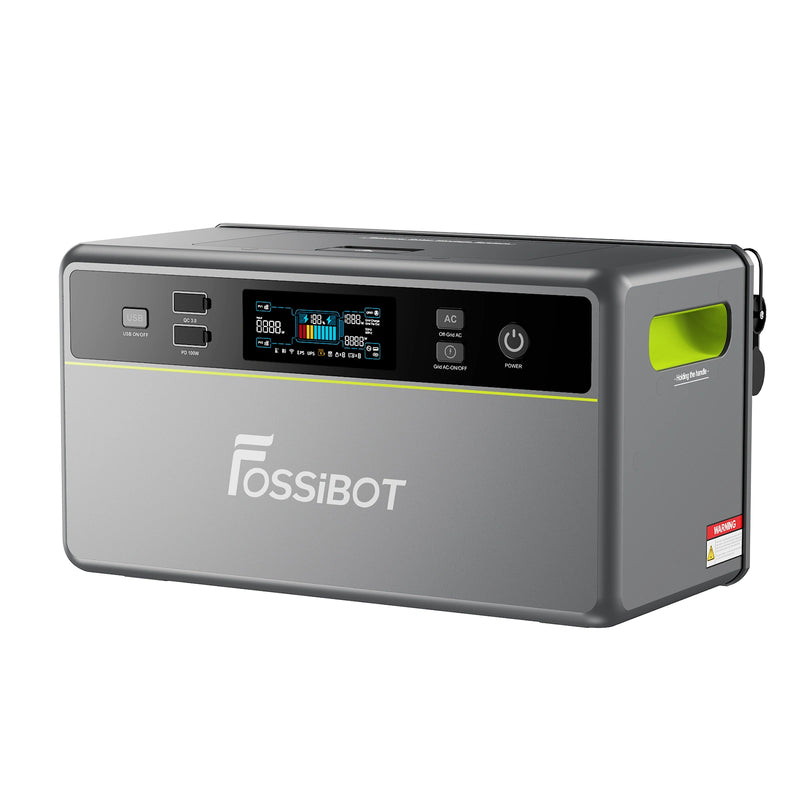
Advanced all-in-one systems, such as the FOSSiBOT FBP1200, seamlessly integrate the MPPT solar charge controller, battery, and microinverter control loops into a single IP65-rated weatherproof enclosure. This eliminates messy external cabling and reduces structural clutter, maximising both spatial efficiency and overall electrical reliability for apartment living. Its built-in EVE LiFePO₄ battery cells deliver over 6,000 charge cycles, while the intelligent energy dispatch algorithm ensures that stored power is used exactly when your household needs it most—all without compromising safety or compliance.
FAQ: Frequently Asked Questions about Balcony Solar Safety
Q1: Can I get an electric shock if I touch the pins of a plug-in solar panel?
Answer: No. High-quality systems certified for European use feature a rapid discharge mechanism. Within milliseconds of pulling the Schuko plug out of the wall, the inverter ceases power transmission, leaving the metal prongs completely safe to touch instantly.
Q2: Will a balcony solar system overload my household grid?
Answer: No, provided you stick to the legal 800W limit. Standard European household circuits are rated for 16 Amps (handling up to 3,600W of load). Injecting a maximum of 800W actually reduces the net load on your primary breaker panel.
Q3: Do I need a professional electrician to install it?
Answer: For a standard 800W plug-and-play system, an electrician is generally not legally mandated in most EU countries. You only need a professional if your home lacks an outdoor-rated socket or if your internal wiring is profoundly outdated and requires safety verification.
Conclusion
The modern European shift toward decentralised energy has made plug-and-play balcony solar one of the most accessible ways to transition to clean energy. Far from being a risky workaround, balcony solar is an engineered, regulated, and highly safe technology framework. By obeying local power limits, securing your mounting setup against high winds, and selecting an integrated system built with stable battery chemistries, you can safely minimise your grid dependency right from your apartment balcony.
Ready for Safe, Plug-and-Play Solar Energy?
Discover the FOSSiBOT FBP1200 Balcony Energy Storage System. Engineered specifically for European apartments and urban living, it combines intelligent MPPT tracking and microinverter control in one streamlined unit, paired with ultra-safe LiFePO₄ battery technology and a seamless plug-in architecture—all housed in an IP65-rated enclosure. Protect your home grid, maximise your daily self-consumption, and slash your electricity bills without compromising on safety or compliance.


